
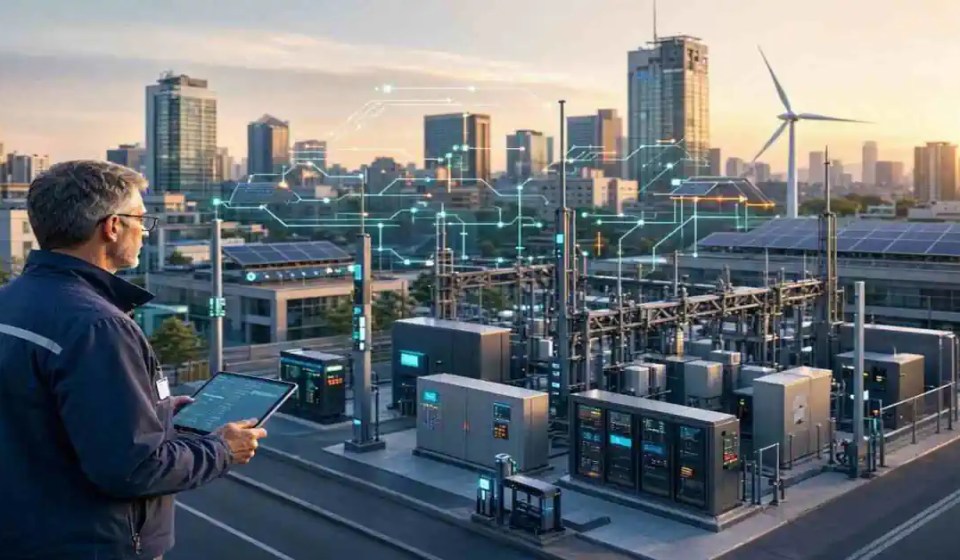
Smart Grids: Improving Efficiency and Reliability in Energy Distribution—The Intelligent Power Revolution

Discover how smart grids are improving efficiency and reliability in energy distribution through automation, real-time monitoring, renewable integration, consumer participation, and resilient infrastructure.
Introduction
Electricity has always been the quiet engine behind modern life. It powers hospitals, homes, factories, schools, phone chargers, traffic signals, data centers, and just about everything in between. Yet for decades, the traditional electrical grid has operated much like a one-way street: power travels from large generating stations to consumers, with limited visibility into what happens along the route.
That old arrangement is changing fast.
As energy demand grows, renewable generation expands, and extreme weather puts infrastructure under pressure, utilities can’t simply rely on yesterday’s tools. They need systems that can respond in real time, identify problems before they become outages, and make better use of every kilowatt available. Enter the smart grid—a modern, digitally enabled energy network designed to make electricity distribution more efficient, flexible, secure, and reliable.
Smart grids aren’t science fiction, nor are they merely fancy meters attached to utility poles. They represent a broad transformation in how electricity is generated, delivered, stored, measured, and consumed. By combining sensors, communications technology, automation, advanced analytics, and distributed energy resources, smart grids give utilities and consumers a clearer picture of the energy system at any given moment.
Put simply, Smart Grids: Improving Efficiency and Reliability in Energy Distribution is not just a catchy phrase. It describes one of the most important infrastructure shifts of the twenty-first century. And frankly, it’s about time.
What Is a Smart Grid?
A smart grid is an electricity network that uses digital technology to monitor and manage the flow of electricity from multiple sources to end users. Unlike conventional grids, which generally send power in one direction—from central power plants to customers—smart grids support two-way communication and two-way energy flow.
For example, a homeowner with rooftop solar panels may produce excess electricity during a sunny afternoon. In a smart-grid environment, that power can be measured, managed, and potentially sent back into the wider network. Likewise, a utility can communicate with smart thermostats, electric vehicle chargers, or industrial equipment to reduce demand during periods of peak use.
At its core, a smart grid makes the electrical system more aware of itself.
The Key Components of a Smart Grid
Several technologies work together to create an intelligent energy network:
- Smart meters: Digital devices that record electricity use in short intervals and communicate data to utilities and customers.
- Advanced sensors: Equipment placed across transmission and distribution lines to detect voltage changes, equipment faults, temperature shifts, and other operational conditions.
- Automated switches and controls: Devices that can isolate damaged areas, reroute electricity, or restore service without waiting for a crew to arrive.
- Communication networks: Secure channels that allow utilities, devices, and customers to exchange information quickly.
- Energy management software: Platforms that analyze large volumes of grid data and help operators make informed decisions.
- Distributed energy resources: Smaller, decentralized energy assets such as solar panels, batteries, wind turbines, electric vehicles, and microgrids.
- Demand-response systems: Programs that encourage or automatically enable customers to reduce or shift electricity use during high-demand periods.
Taken together, these pieces turn a passive electricity network into an active, responsive system. It’s a bit like upgrading from an old road map to a GPS navigation system that can spot traffic jams, suggest detours, and warn drivers before they hit trouble.
Why Traditional Grids Need an Upgrade
Traditional electrical grids were built for a different era. Large coal, gas, hydroelectric, or nuclear plants generated power centrally, while customers primarily consumed it. The model worked reasonably well when electricity demand was predictable and energy sources were relatively stable.
But today’s energy landscape is far more complicated.
Renewable sources such as solar and wind are cleaner, but they can be variable. Electric vehicles are increasing demand on local distribution networks. Consumers are becoming “prosumers,” meaning they both consume and produce electricity. Severe storms, heat waves, wildfires, and cyber threats are also exposing weaknesses in aging grid infrastructure.
Here are a few common challenges facing conventional grids:
- Limited real-time visibility: Utilities may not know exactly where an outage has occurred until customers report it.
- Inefficient peak-demand management: Power systems often need expensive standby generation to meet short-lived demand spikes.
- Slow outage recovery: Manual inspections and switching can delay restoration after a fault.
- Difficulty integrating renewable energy: Variable generation can create balancing challenges without sophisticated controls.
- Aging equipment: Many poles, transformers, and transmission lines are nearing or exceeding their expected service lives.
- Energy losses: Electricity naturally loses some energy during transmission and distribution, especially over long distances.
Smart-grid technology addresses these headaches with data, automation, and better coordination. No magic wand involved—just smarter planning and faster decisions.
Smart Grids: Improving Efficiency and Reliability in Energy Distribution
The biggest promise of the smart grid lies in its ability to improve two things that matter deeply to everyone: efficiency and reliability.
Efficiency means using energy, equipment, and investment more wisely. Reliability means keeping the lights on, restoring power quickly when disruptions occur, and maintaining stable service even as conditions change.
Improving Energy Efficiency
Smart grids make it easier to see when, where, and how electricity is being used. That visibility helps utilities reduce waste and helps consumers make better choices.
Real-Time Energy Data
With conventional meters, electricity use may only be recorded once per month. Smart meters, on the other hand, can provide detailed information at much shorter intervals. This gives households and businesses access to clearer consumption patterns.
A business might discover that its cooling system is drawing huge amounts of power overnight. A homeowner may notice that charging an electric vehicle during the evening peak costs more than charging after midnight. Armed with that information, people can adjust their habits without sacrificing comfort.
Demand Response and Peak Load Reduction
Electricity demand isn’t constant. It usually rises sharply during hot afternoons, cold mornings, or major events when millions of people use appliances at the same time. These peak periods can strain the grid and force utilities to activate costly, high-emission backup generators.
Smart grids support demand-response programs that encourage users to shift nonessential energy use away from peak periods. For instance:
- A smart thermostat may slightly adjust a building’s temperature for a short time.
- An electric vehicle charger may pause charging until demand falls.
- A factory may delay a noncritical process by an hour or two.
- A battery storage system may discharge stored energy during peak demand.
These changes might seem small individually. However, multiplied across thousands or millions of users, they can make a serious dent in peak demand. Little by little, the grid becomes more balanced.
Reducing Transmission and Distribution Losses
Electricity loses energy as it travels through wires. While some loss is unavoidable, smart-grid technologies can reduce unnecessary waste by improving voltage control, optimizing power flows, and identifying overloaded equipment.
For example, automated voltage regulation can maintain electricity quality more precisely across different parts of the network. Rather than overcompensating “just in case,” the system can make measured adjustments based on live data. That’s a more efficient way to run the show.
Building a More Reliable Energy System
Reliability isn’t merely about avoiding blackouts. It also involves maintaining stable voltage, recovering quickly from faults, protecting critical facilities, and ensuring that the grid can adapt to unexpected events.
Faster Outage Detection and Restoration
In an old-fashioned grid, a utility may learn about an outage only after customers start calling. Crews then need to inspect equipment, locate the problem, isolate damaged sections, and restore service manually. Depending on the location and severity of the fault, this process can take hours.
Smart grids can dramatically speed things up.
Sensors and automated systems can identify the location of a fault almost immediately. Automated switches can isolate the affected area and reroute electricity around it where possible. This process, often called self-healing, reduces the number of customers affected and shortens restoration times.
Imagine a tree branch falls on a power line during a storm. Instead of knocking out power for an entire neighborhood, the smart grid may isolate the damaged line segment and restore service to most customers within minutes. That’s not just convenient—it can be lifesaving for hospitals, emergency services, and vulnerable residents.
Better Resilience During Extreme Weather
Weather-related events are becoming a major concern for utilities worldwide. Hurricanes, ice storms, heat waves, floods, droughts, and wildfires can damage infrastructure or create huge demand swings.
Smart-grid tools help utilities prepare for and respond to these threats by:
- Monitoring equipment conditions before storms arrive.
- Predicting likely outage locations using weather and vegetation data.
- Reconfiguring networks to reduce risk.
- Coordinating backup generation and battery storage.
- Supporting microgrids that can operate independently when the main grid fails.
- Prioritizing restoration for hospitals, shelters, water facilities, and emergency operations centers.
Dangling from a utility pole in the middle of a storm, a damaged wire is more than a maintenance problem—it’s a reminder that resilience needs to be built into the system long before trouble arrives.
Renewable Energy Integration: A Major Smart-Grid Advantage
The global transition to cleaner energy depends heavily on smarter grids. Solar and wind generation are essential for reducing emissions, but they don’t always produce electricity at the exact moment consumers need it.
Solar generation peaks during daylight hours. Wind generation can rise or fall depending on weather conditions. Without advanced grid management, these fluctuations can become difficult to handle.
Smart grids help balance renewable resources through forecasting, automation, flexible demand, and storage.
Forecasting Renewable Output
Modern forecasting tools can analyze weather data, historical patterns, satellite imagery, and local conditions to estimate how much solar or wind energy will be available. Utilities can then plan ahead, scheduling other resources or adjusting demand-response programs as needed.
No forecast is perfect, of course. Weather has a mind of its own. Still, better predictions make the grid more prepared and less dependent on last-minute adjustments.
Batteries and Energy Storage
Battery storage plays a growing role in smart-grid systems. Batteries can absorb surplus renewable energy when production is high and release it later when demand rises or generation drops.
For example, solar panels may generate more electricity than a neighborhood needs at noon. Instead of wasting that energy, batteries can store it for the evening, when people return home, cook dinner, run appliances, and charge vehicles.
This capability provides several benefits:
- Reduces curtailment of renewable energy.
- Supports grid stability during sudden fluctuations.
- Lowers reliance on fossil-fuel peaker plants.
- Provides backup power during outages.
- Helps defer expensive upgrades to local infrastructure.
Empowering Consumers and Businesses
One of the most interesting changes brought by smart grids is that consumers are no longer just passive bill-payers. They can become active participants in the energy system.
Through mobile apps, online dashboards, smart appliances, and time-based pricing, customers can make informed decisions about their electricity use.
Time-of-Use Pricing
Time-of-use pricing charges different electricity rates depending on the time of day. Rates may be higher during peak demand and lower when the grid has abundant capacity.
For some customers, this can feel like a hassle at first. Yet it also creates an opportunity. Running a dishwasher overnight, charging an EV after peak hours, or pre-cooling a home before a hot afternoon can reduce bills while helping the grid operate more smoothly.
The goal isn’t to make people obsess over every light switch. It’s to provide options and incentives that make sense in everyday life.
The Rise of the Prosumer
A prosumer is someone who both produces and consumes energy. Homeowners with solar panels, businesses with battery systems, and communities with local microgrids all fit this description.
Smart grids make it possible for these participants to contribute energy back to the network, respond to local needs, and receive compensation for services such as demand reduction or stored energy delivery.
That shift could reshape the energy economy. Rather than relying entirely on a few giant power plants, the future may involve millions of smaller resources working together. It sounds complicated—and it is—but smart-grid platforms are designed to coordinate that complexity.
Cybersecurity and Privacy: The Other Side of the Coin
More connectivity brings more benefits, but it also creates new risks. Smart grids rely on digital communication, which means cybersecurity must be treated as a core requirement, not an afterthought.
A cyberattack on energy infrastructure could disrupt service, damage equipment, compromise customer data, or undermine public confidence. Utilities therefore need layered defenses, including encryption, network segmentation, continuous monitoring, secure device management, employee training, and incident-response plans.
Privacy also matters. Smart-meter data can reveal patterns about when people are home, when they use appliances, or how much energy they consume. Strong data governance and transparent customer policies are essential.
The bottom line? A smart grid must be secure by design. There’s no getting around it.
Challenges to Smart-Grid Adoption
Although the benefits are compelling, smart-grid deployment isn’t always a walk in the park. Utilities, regulators, technology providers, and communities must work through several practical challenges.
Major Barriers Include
- High upfront costs: Modernizing equipment, software, communications networks, and cybersecurity systems requires substantial investment.
- Regulatory complexity: Energy rules vary by region, and outdated regulations may slow innovation.
- Interoperability concerns: Devices from different manufacturers must communicate reliably with one another.
- Workforce training: Utilities need employees with expertise in data analysis, automation, cybersecurity, and advanced power systems.
- Public acceptance: Customers may have concerns about privacy, health myths, costs, or changes to billing structures.
- Equity considerations: Programs should ensure that low-income households and underserved communities also benefit from grid modernization.
Still, these challenges are manageable with clear planning and public engagement. The alternative—continuing to patch an aging system while demand and climate risks increase—could prove far more expensive in the long run.
The Future of Smart Grids
The next phase of energy distribution will likely be more decentralized, automated, and customer-focused than ever before. Artificial intelligence, edge computing, vehicle-to-grid technology, advanced batteries, and microgrids will continue to expand the grid’s capabilities.
Electric vehicles, in particular, could become a major flexible resource. When millions of EVs are connected intelligently, they may charge when renewable energy is abundant and, in some cases, send stored electricity back to the grid during periods of high demand.
Meanwhile, communities may develop local microgrids that can operate independently during emergencies. Hospitals, universities, military facilities, and remote towns are already exploring these options. When the larger grid falters, a well-designed microgrid can keep critical services running.
In other words, Smart Grids: Improving Efficiency and Reliability in Energy Distribution will remain central to building an energy system that is cleaner, tougher, and better prepared for whatever comes next.
Frequently Asked Questions
What is the difference between a traditional grid and a smart grid?
A traditional grid generally delivers electricity in one direction from centralized power plants to consumers. A smart grid uses digital communication, sensors, automation, and data analytics to support two-way communication and more responsive energy management.
How do smart grids reduce power outages?
Smart grids use sensors to detect problems quickly and automated controls to isolate damaged sections of the network. They can reroute electricity around faults, reducing outage areas and speeding up restoration.
Do smart meters save consumers money?
Smart meters do not automatically reduce bills on their own. However, they provide detailed energy-use information and can support time-based pricing programs, helping customers shift usage to lower-cost periods.
Can smart grids support solar panels and electric vehicles?
Yes. Smart grids are designed to manage distributed resources such as rooftop solar, home batteries, electric vehicles, and community energy systems. They help balance supply and demand as these technologies become more common.
Are smart grids vulnerable to hacking?
Like any connected system, smart grids face cybersecurity risks. Utilities must use strong security practices, including encryption, monitoring, access controls, software updates, and emergency response planning.
Conclusion
The electricity grid may not be glamorous, but it is one of society’s most essential systems. Every major shift in how we live—from electrified transportation to renewable power to connected homes—depends on an energy network that can keep up.
Smart grids provide the intelligence, flexibility, and resilience needed for that job. They can reduce waste, improve outage response, support clean-energy growth, empower consumers, and make infrastructure stronger in the face of disruption. Sure, implementation requires investment, careful regulation, and robust cybersecurity. But the payoff is significant.
As the energy world becomes more complex, the answer isn’t simply to build more of the same. It’s to build smarter.