
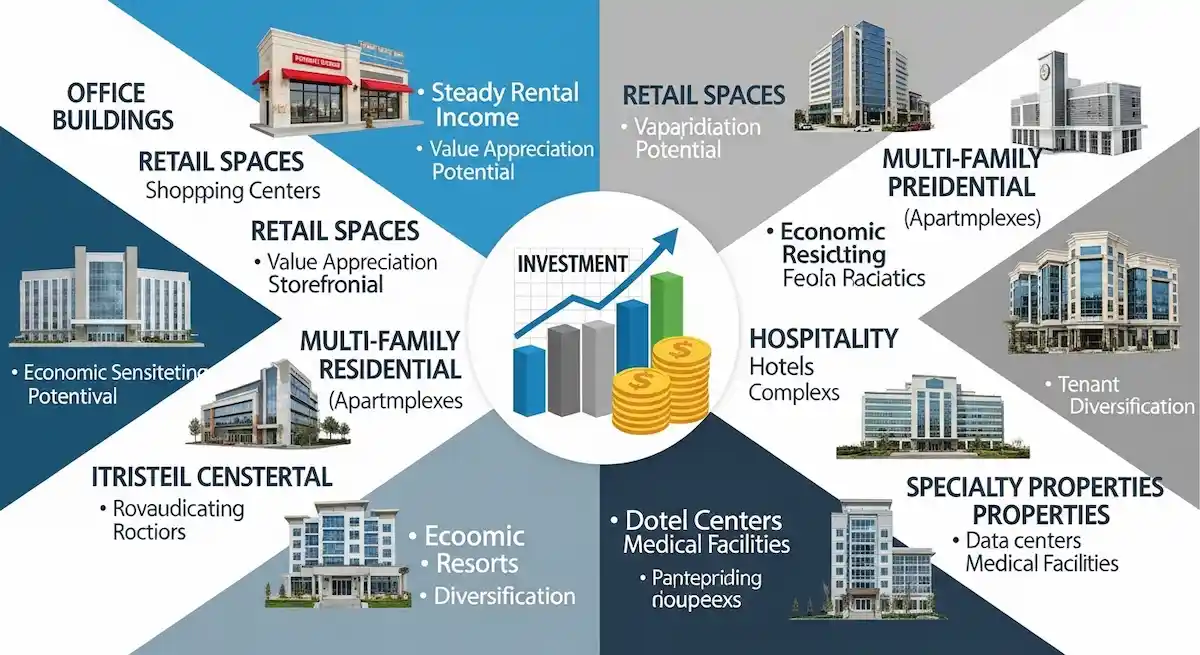
Commercial Property Types and Investment: A Practical Guide to Building Wealth Beyond Residential Real Estate

Explore Commercial Property Types and Investment strategies, from office buildings and retail centers to warehouses and multifamily assets. Learn how to evaluate risk, cash flow, financing, and long-term value.
Introduction
Commercial real estate has a certain pull that’s hard to ignore. It’s bigger than a single-family rental, more complex than buying a condo, and often packed with opportunities for investors who are willing to do their homework. A well-located warehouse, a busy neighborhood shopping center, or a thoughtfully managed apartment building can generate meaningful income for years. Of course, it isn’t all smooth sailing. Commercial deals come with larger price tags, longer leases, complicated financing, and plenty of moving parts.
Understanding Commercial Property Types and Investment is the first step toward making smart decisions. Not every property is right for every investor, and not every “great deal” is actually great once you inspect the numbers, the tenants, the location, and the market conditions. In other words, don’t judge a building by its shiny glass facade.
Still, for investors looking to diversify, create dependable cash flow, or build a portfolio with institutional-grade potential, commercial property can be a serious game changer.
This guide breaks down the major commercial property categories, how they work, what makes them attractive, and what risks investors should keep on their radar.
What Is Commercial Real Estate?
Commercial real estate, commonly called CRE, refers to property used primarily for business or income-producing purposes. Unlike a typical residential home, commercial property is generally leased to businesses, organizations, or multiple residential tenants.
The broad commercial real estate universe includes:
- Office buildings
- Retail stores and shopping centers
- Industrial buildings and warehouses
- Multifamily apartment properties
- Hospitality assets
- Medical facilities
- Self-storage properties
- Mixed-use developments
- Special-purpose buildings
The income usually comes from rent paid by tenants. Depending on the lease structure, tenants may also pay some or all of the property’s operating expenses, including taxes, insurance, utilities, and maintenance. That’s where things can get interesting—and profitable.
Why Investors Consider Commercial Property
Commercial property attracts investors for several reasons. First and foremost, it can provide larger and more consistent income streams than many residential investments. A tenant leasing 10,000 square feet for five or ten years can offer a level of predictability that a month-to-month residential rental simply can’t match.
Here are several common benefits:
Stronger Income Potential
Commercial leases often produce higher rental income than residential properties. A building with multiple tenants can create several streams of revenue at once, which may reduce the impact of one vacancy.
Longer Lease Terms
Residential leases commonly run for 12 months. Commercial leases, however, may last anywhere from three to 15 years, sometimes longer. That longer commitment can make income easier to forecast.
Expense Pass-Through Opportunities
In many commercial lease agreements, tenants contribute to operating expenses. Triple-net leases, for example, may require tenants to pay property taxes, building insurance, and maintenance costs in addition to base rent. Sounds pretty appealing, right?
Value Can Be Increased Through Management
Commercial property value is often tied directly to its net operating income, or NOI. Improve occupancy, raise rents responsibly, reduce expenses, or upgrade the tenant mix, and the property’s value may increase significantly.
Portfolio Diversification
Investing across property types can help spread risk. An investor who owns multifamily, industrial, and medical office assets isn’t relying on one market segment alone.
That said, bigger opportunities tend to bring bigger responsibilities. Commercial property isn’t a “set it and forget it” investment, especially during the early acquisition and stabilization stages.
Commercial Property Types and Investment: The Main Categories
Every commercial asset class behaves differently. Tenant demand, lease terms, maintenance obligations, financing options, and economic sensitivity can vary widely. Let’s take a closer look.
Office Buildings
Office buildings range from small suburban professional suites to massive downtown towers. They are often categorized as Class A, Class B, or Class C properties.
- Class A: Premium buildings in excellent locations with modern design, top-tier amenities, and high-quality tenants.
- Class B: Well-maintained but less prestigious buildings, often offering value-add potential.
- Class C: Older properties that may need substantial improvements or serve more price-sensitive tenants.
Office real estate can be rewarding, particularly in growing business districts. However, remote and hybrid work have reshaped demand in many markets. Investors need to carefully study vacancy rates, local employment trends, tenant industries, and whether the property offers features businesses now expect—flexible layouts, parking, updated technology, and comfortable common areas.
A gleaming office tower might look like a slam dunk. Yet if half the floors are empty, the math can turn ugly in a hurry.
Retail Properties
Retail real estate includes neighborhood centers, strip malls, standalone storefronts, regional malls, restaurants, and mixed retail developments. These properties depend heavily on location, visibility, access, parking, and local consumer habits.
Common retail tenant types include:
- Grocery stores
- Pharmacies
- Restaurants and coffee shops
- Fitness centers
- Beauty salons
- Banks
- Discount retailers
- Service businesses
- Medical clinics
Retail has faced plenty of headwinds from e-commerce, but it’s far from dead. In fact, service-based and necessity-focused retail can remain remarkably resilient. People may buy paper towels online, but they still need haircuts, dental visits, groceries, workouts, and lunch with friends.
When evaluating retail, pay attention to the tenant mix. A center anchored by a strong grocery store or pharmacy may draw steady foot traffic that benefits smaller businesses nearby.
Industrial Properties
Industrial real estate has become one of the most talked-about sectors in recent years. It includes warehouses, distribution centers, manufacturing facilities, flex spaces, research facilities, and logistics hubs.
The boom in online shopping, supply chain changes, and last-mile delivery has driven demand for well-located industrial buildings. Properties near highways, ports, rail lines, airports, and major population centers can be especially valuable.
Industrial investments may include:
- Distribution warehouses for storing and shipping goods.
- Manufacturing facilities used for production and assembly.
- Flex industrial buildings combining office, showroom, and warehouse space.
- Cold storage facilities for food, pharmaceuticals, and other temperature-sensitive products.
- Last-mile delivery centers located near dense urban areas.
Industrial assets are often attractive because many tenants need specialized locations and infrastructure. Once a tenant has invested in racking, loading systems, machinery, or refrigeration equipment, moving can be expensive and disruptive. That can strengthen tenant retention.
Still, industrial buildings aren’t automatically foolproof. Ceiling height, loading docks, truck access, zoning, power capacity, environmental concerns, and building functionality all matter. A warehouse that worked beautifully in 2005 may be awkwardly outdated today.
Multifamily Apartment Buildings
Multifamily properties include duplexes, triplexes, small apartment buildings, garden-style complexes, mid-rise buildings, and high-rise apartment towers. Technically, properties with five or more units are generally classified as commercial real estate for financing purposes.
Multifamily is often considered one of the more accessible commercial sectors because people will always need places to live. Even so, demand isn’t guaranteed. Job growth, household formation, local supply, rent affordability, and neighborhood desirability can shift quickly.
The advantages of multifamily include diversified rent income. If one tenant leaves a 100-unit building, 99 units may still be producing revenue. Compare that with a single-tenant retail building: one vacancy could mean zero income.
Apartment investors should evaluate:
- Current occupancy and turnover rates
- In-place rents versus market rents
- Deferred maintenance
- Utility expenses
- Property management quality
- Local rent regulations
- New construction pipeline
- Neighborhood safety and amenities
Multifamily may seem straightforward, but operating it well requires discipline. A few neglected repairs, poor screening practices, or weak collections can quietly chew through returns.
Hospitality Properties
Hotels, motels, resorts, and extended-stay properties fall within the hospitality category. Unlike apartments or office properties, hotel rooms are typically rented nightly. Revenue can rise quickly during a strong travel season—but it can also fall off a cliff during economic downturns, public health events, or local disruptions.
Hospitality can offer significant upside in high-demand locations near convention centers, tourist attractions, airports, beaches, or business districts. However, it is highly management-intensive and sensitive to economic cycles.
Key metrics include:
- Occupancy rate
- Average daily rate, or ADR
- Revenue per available room, or RevPAR
- Brand affiliation
- Online reviews
- Labor costs
- Seasonal demand patterns
For a first-time commercial investor, a hotel may be a bit of a wild ride. Not impossible, just not exactly the shallow end of the pool.
Medical Office Buildings
Medical office buildings are designed for healthcare-related tenants such as physicians, dentists, imaging centers, outpatient clinics, physical therapists, and specialty practices.
These properties can benefit from demographic trends, especially in areas with aging populations. Medical tenants often invest heavily in build-outs, specialized equipment, and patient accessibility features, making them less likely to relocate casually.
Strong medical office locations are often near hospitals, major residential areas, or population centers with limited healthcare services. Accessibility, parking, elevators, ADA compliance, and proximity to complementary healthcare providers all play important roles.
Self-Storage Facilities
Self-storage is a unique commercial property type that benefits from life changes—moving, downsizing, divorce, college, business expansion, and more. It’s not glamorous, but it can be a dependable business in the right market.
Many modern facilities include climate-controlled units, digital access systems, surveillance, and online rental platforms. Investors should review local supply carefully, though. Storage can be relatively easy to build, and oversupply may pressure occupancy and rental rates.
Mixed-Use Developments
Mixed-use properties combine two or more uses, such as apartments above ground-floor retail, office space beside restaurants, or hotel rooms connected to a residential tower.
These projects can create dynamic, walkable environments and diversify income streams. On the flip side, they can also be complicated to manage. Residential tenants may not love late-night restaurant activity downstairs, while retail tenants may have concerns about shared parking or building access.
Done well, mixed-use can be a home run. Done poorly, it can become a logistical headache with expensive consequences.
How Commercial Properties Make Money
Commercial properties generally create returns through two major channels: ongoing cash flow and property appreciation.
Rental Income
Rent is the most obvious source of revenue. Investors collect payments from tenants and subtract operating expenses to calculate net operating income.
The basic formula is:
Net Operating Income = Gross Rental Income + Other Income – Operating Expenses
Other income may include parking fees, laundry revenue, storage rentals, application fees, signage income, or vending agreements.
Operating expenses may include:
- Property taxes
- Insurance
- Repairs and maintenance
- Utilities
- Property management
- Landscaping
- Security
- Cleaning
- Administrative costs
Mortgage payments are not included in NOI. That distinction matters because lenders and investors use NOI to evaluate the property’s operating performance before debt service.
Appreciation
Commercial property values often rise when NOI increases or market capitalization rates decline. A cap rate is the relationship between a property’s NOI and its purchase price or market value.
For example, if a property produces $200,000 in annual NOI and trades at a 6% cap rate, its estimated value is about $3.33 million.
Value = NOI ÷ Cap Rate
That’s why increasing income by even a modest amount can have a meaningful effect on value. If you raise occupancy, renegotiate leases, improve management, or add revenue-generating amenities, you may create equity without waiting for the broader market to do the work.
Financing Commercial Real Estate Investments
Commercial financing is usually more complex than a typical home mortgage. Lenders look closely at the property’s income, the borrower’s experience, credit profile, liquidity, and debt service coverage ratio.
Common financing options include:
- Traditional bank loans
- Commercial mortgage-backed securities loans
- Credit union loans
- SBA loans for owner-occupied businesses
- Private lenders
- Seller financing
- Joint venture equity
- Real estate syndications
A lender may require a down payment of 20% to 35% or more, depending on the asset type and risk profile. Loan terms can vary significantly, and many commercial loans have shorter terms with balloon payments. Don’t overlook this detail. A favorable interest rate today doesn’t help much if you can’t refinance when the loan matures.
Key Risks to Consider Before Investing
No article about Commercial Property Types and Investment would be complete without a candid look at risk. Commercial real estate can be lucrative, but it is not a guaranteed money machine.
Vacancy Risk
A vacant unit—or worse, a vacant anchor tenant space—can quickly reduce cash flow. In single-tenant properties, one departure can eliminate all rental income.
Market Risk
Changes in local job growth, interest rates, consumer behavior, population trends, and new construction can affect values and leasing demand.
Tenant Credit Risk
A tenant’s ability to pay rent matters enormously. A long lease with a financially weak tenant may not be worth much when the business hits a rough patch.
Capital Expenditure Risk
Roofs, HVAC systems, elevators, parking lots, plumbing, and electrical systems don’t last forever. Large repairs can be costly, and they often show up at the worst possible time.
Interest Rate Risk
Higher interest rates can increase borrowing costs and reduce property values. If an investor relies heavily on debt, even a modest rate change can squeeze cash flow.
Regulatory Risk
Zoning changes, environmental regulations, rent controls, building codes, and local tax increases can all affect performance. Before signing anything, understand the regulatory landscape.
A Smart Due Diligence Checklist
Before buying a commercial property, investors should investigate far more than the asking price. A solid due diligence process can save a fortune—and a lot of sleepless nights.
Consider reviewing the following:
- Current rent roll
- Existing leases and lease expiration dates
- Tenant payment history
- Operating statements for at least three years
- Property tax records
- Insurance costs and claims history
- Environmental reports
- Building inspection reports
- Zoning and permitted uses
- Market rental rates
- Vacancy rates in the area
- Capital improvement needs
- Title report and survey
- Local development plans
- Loan terms and prepayment penalties
It’s tempting to rush when a deal looks hot. Don’t. Slow down, ask uncomfortable questions, and bring in experienced professionals. A commercial real estate attorney, broker, lender, inspector, accountant, and property manager can all help spot issues that aren’t obvious at first glance.
Building an Investment Strategy That Fits
There is no universal “best” commercial property. The right investment depends on your goals, capital, risk tolerance, experience, and timeline.
For example:
- An investor seeking stable income may prefer a fully leased medical office building.
- An investor looking for growth may target an underperforming apartment complex with renovation potential.
- Someone with logistics expertise may focus on industrial properties.
- A passive investor may join a professionally managed real estate syndication rather than buying a building alone.
Start by defining what success looks like for you. Is it monthly cash flow? Long-term appreciation? Tax efficiency? Wealth preservation? A family legacy? Once you know the destination, picking the vehicle becomes much easier.
Frequently Asked Questions
What is the best commercial property type for beginners?
Multifamily properties, small retail centers, and smaller mixed-use buildings are often approachable starting points because they may have multiple income sources and relatively understandable operations. However, “best” depends on the investor’s market knowledge, capital, and management ability.
How much money do I need to invest in commercial real estate?
The amount varies widely. Direct ownership may require hundreds of thousands of dollars or more for down payments, reserves, closing costs, and improvements. Investors with less capital may consider REITs, crowdfunding platforms, or real estate syndications, though each option has its own risks and limitations.
Are commercial properties more profitable than residential properties?
They can be, but profitability depends on the purchase price, financing, tenant quality, operating costs, market conditions, and management. Commercial properties may offer higher income potential, but they can also carry larger losses when vacancies or major repairs occur.
What is a triple-net lease?
A triple-net, or NNN, lease generally requires the tenant to pay base rent plus property taxes, insurance, and maintenance expenses. Lease terms vary, so investors should always read the agreement carefully rather than assuming all costs are covered.
How do commercial properties get valued?
Commercial properties are commonly valued using the income approach, which considers net operating income and market cap rates. Appraisers may also use comparable sales and replacement-cost analysis, depending on the property type.
Is commercial real estate a passive investment?
Not always. Direct ownership can require active involvement in leasing, maintenance, accounting, financing, and tenant relations. Hiring a professional management company can reduce day-to-day involvement, but owners still need oversight.
Conclusion
Commercial real estate offers a broad landscape of opportunities, from apartment communities and medical offices to warehouses, retail centers, and self-storage facilities. Each category has its own rhythm, its own risks, and its own potential rewards.
The secret isn’t chasing whichever property type is getting the most buzz. It’s understanding the fundamentals: location, tenant demand, lease quality, financing, operating costs, and the ability to create or preserve income over time. A fancy building in a weak market can disappoint. Meanwhile, a plain-looking industrial facility with a reliable tenant and strong logistics access may quietly outperform for years.
When approaching Commercial Property Types and Investment, patience and preparation go a long way. Study the market, verify the numbers, maintain cash reserves, and don’t be afraid to walk away from a deal that doesn’t make sense. In commercial real estate, as in life, the best opportunities often belong to the people who keep their heads while everyone else is chasing the next shiny thing.
Disclaimer: This article is for informational and educational purposes only and should not be construed as financial, investment, or legal advice. Financial markets and product terms change frequently. Always conduct your own research or consult with a qualified financial advisor before making any financial decisions.