
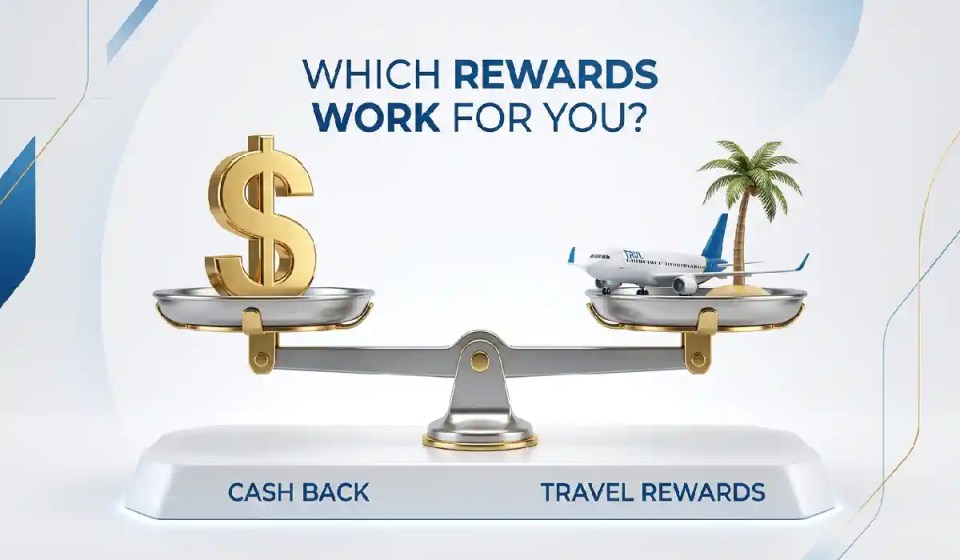

You stand at the rewards crossroads every time you apply for a new credit card. On one side sits the lure of hard cashback, a simple way to pad your bank account. On the other side waits the promise of travel rewards, offering you the potential for luxury flights or hotel stays you might not buy otherwise. Choosing between these options is a major decision that depends on your spending habits and your goals. This article helps you understand the differences, compare how they work, and find the path that fits your life.
Understanding Cash Back Rewards
Cash back is the most direct form of credit card rewards. You earn a percentage of your spending back as a credit. It works in a few ways. Some cards offer a flat rate on every dollar you spend. Others use a tiered system, giving you higher percentages in specific categories like groceries or gas. A few cards use rotating categories that change every few months. The main goal of a cash back card is to offer an easy, predictable way to get value from your everyday purchases.
How Cash Back Systems Work
Getting your money back is usually easy. You can often choose how you want to receive your rewards. The most common method is a statement credit, which lowers the balance you owe on your credit card. Other options might include a direct deposit into your bank account or even a paper check mailed to your home. Because the value is clear, there is no guesswork involved in redeeming these rewards.
The Power of Simplicity: Advantages of Cash Back
The biggest perk of cash back is its simplicity. You know exactly what you will get back for every dollar you spend. There is no need to hunt for dates or deal with complex booking sites. Cash back is also the most flexible option because you can use the money for anything. Whether you want to pay off debt, cover daily expenses, or put the funds into a savings account, the choice is yours. Treating cash back as a small boost to your savings can even provide a modest return over time.
Limitations and Earning Caps in Cash Back Programs
While simple, cash back is not always perfect. Some cards limit the amount of cash back you can earn in specific categories. For example, a card might offer high rewards on your first few thousand dollars of spending in a year, but then drop to a lower rate for anything spent above that limit. This makes it important to read the fine print. You should ensure your typical spending fits within these caps so you do not leave value on the table.
Deconstructing Travel Rewards Ecosystems
Travel rewards are different. Instead of cash, you earn points or miles tied to a specific program. These points are meant to be used for flights, hotel stays, or other travel perks. The system relies on a network of partners, such as airlines and hotel chains, that work with the credit card issuer. Because the value of a point can fluctuate based on how you use it, these rewards require more effort to manage than cash back.
Points vs. Miles: The Fundamental Difference
People often use the terms points and miles interchangeably, but they can be different. Points are often earned through bank-specific programs. These points are usually flexible and can be transferred to various airline or hotel partners. Miles, on the other hand, are typically earned directly through a specific airline’s loyalty program. While both can be used for travel, flexible points generally offer more options and freedom than airline-specific miles.
Valuation: The Art of Maximizing Point Value (CPP)
The key to travel rewards is knowing their value. This is often measured in Cents Per Point (CPP). To find this number, you divide the cash price of a flight by the number of points required to book it. For example, if a flight costs $500 or 25,000 points, you are getting 2 cents per point. Savvy travelers look for ways to boost this number by transferring points to partner programs. A well-timed transfer could make a business class seat worth much more than its cash price.
The Complexity of Travel Redemption: Fuel Surcharges and Blackout Dates
Travel rewards come with hurdles. Airlines use dynamic pricing, meaning the number of miles needed for a flight changes without notice. Some airline programs add heavy fuel surcharges to “free” reward tickets, which can cost you hundreds of dollars in cash. You might also face blackout dates, which are times when your points cannot be used. Navigating these rules takes time and research, which is a major factor to consider before choosing a travel card.
The Direct Comparison of Cash Back vs. Travel Rewards
When you compare these two systems, you are choosing between certainty and potential. Cash back gives you a guaranteed return on every purchase. Travel rewards offer a potential upside if you learn to use them well.
Flexibility and Utility
Cash back offers ultimate flexibility. You can apply it to any expense, even debt. Travel points are only truly valuable if you plan to travel. If you do not have the time to research flights or the flexibility to travel on specific dates, your points might sit idle. For most people, cash back is the more practical choice for daily financial health.
Earning Rates and Bonus Structures
Cash back cards often excel at steady, everyday spending. A 2% flat-rate card is a workhorse that requires no extra thought. Travel cards often focus on high rewards in specific categories like travel and dining. If you spend heavily in those areas, a travel card can help you earn rewards quickly. You must decide if your spending habits favour a broad, flat rate or a targeted, higher-earning structure.
Annual Fees and Break-Even Analysis
Many premium travel cards charge annual fees. These fees are justified if the travel credits and point earnings give you more value than the cost of the fee. To find your break-even point, you must calculate the total value of the perks you will actually use. If you cannot extract more value than the annual fee, you are paying for benefits that do not help you.
Determining Your Best Rewards Path
Choosing the right card means looking at your own life. Do you want to deal with points and transfer partners, or do you want a simple credit on your statement each month?
Profile 1: The Pragmatist (Best for Cash Back)
If you value simplicity and want a clear, guaranteed return, a cash back card is for you. This is also the best choice if you are focused on paying down debt. You can use your cash back rewards to lower your card balance, which is a powerful way to reduce your interest costs. Look for a card with no annual fee to keep your rewards pure profit.
Profile 2: The Frequent Flyer (Best for Travel Rewards)
If you travel often, enjoy planning trips, and want to reach for luxury experiences like business class flights, a travel rewards card is the right tool. You must be willing to learn the rules of your loyalty programs and check for the best deals. The first step is to sign up for frequent flyer and hotel loyalty programs so you are ready to earn and redeem.
Hybrid Strategies: Blending Cash Back and Travel
You do not have to pick just one type of card. A common strategy is to use a travel card for your major travel and dining purchases to maximize point earning. Then, use a flat-rate cash back card for all your other day-to-day spending. This allows you to collect travel points for big trips while still getting a solid return on groceries, gas, and utility bills.
Final Thoughts
The choice between cash back and travel rewards comes down to what you value most. Cash back provides immediate, stress-free value that you can use for any purpose. Travel rewards offer the potential to experience travel in a way that your budget might not otherwise allow, provided you are willing to invest the time to optimize your redemptions. There is no right or wrong answer. Your best choice is the one that fits your spending habits and your goals for the future. Look at your own behavior, pick the card that rewards you for how you already spend, and enjoy the benefits of your credit card strategy.
Disclaimer: This article is for informational and educational purposes only and should not be construed as financial, investment, or legal advice. Financial markets and product terms change frequently. Always conduct your own research or consult with a qualified financial advisor before making any financial decisions.



[…] used to sound fairly straightforward: pick stocks, buy bonds, watch the market, and hope your portfolio climbs over time. Today, though, many investors want more from their money. They don’t just want returns on a […]